Nacha
Like Water for ChocolateNacha, the De la Garza family cook, becomes Tita’s first and most enduring source of care, teaching her through food and practical attention what the rest of the household cannot provide. Though Nacha dies on the day of Rosaura’s wedding, her knowledge continues to guide Tita: as a remembered presence in the kitchen, a voice during childbirth, and a figure who appears once more near the end of Tita’s life. Her story links domestic labor with affection, memory, and the survival of knowledge across generations.
Identity and Background
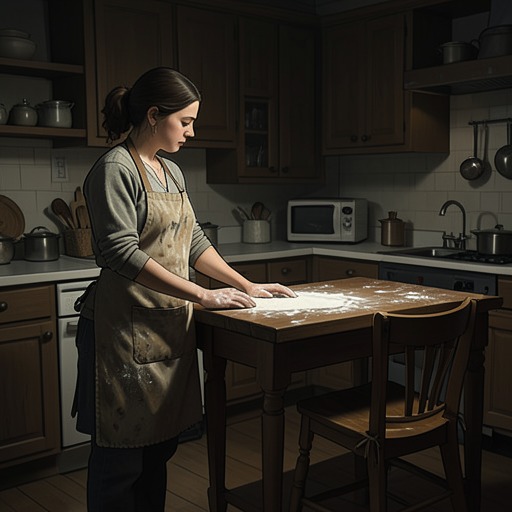
Nacha is an experienced cook who, despite being unable to read or write, is described as knowing everything there is to know about cooking. She has never married or had children, but she recognizes that she can care for a baby and teach it through feeding. The narrative first introduces her in connection with Tita’s birth: although Nacha is half-deaf, she hears the unborn child’s loud sobbing. In the family account she tells, Tita’s cries bring on an early labor, and the child arrives prematurely on the kitchen table. The scene gives Nacha a distinctive place in the family’s history: she is both the witness who tells the story and the cook whose kitchen becomes Tita’s lifelong domain.
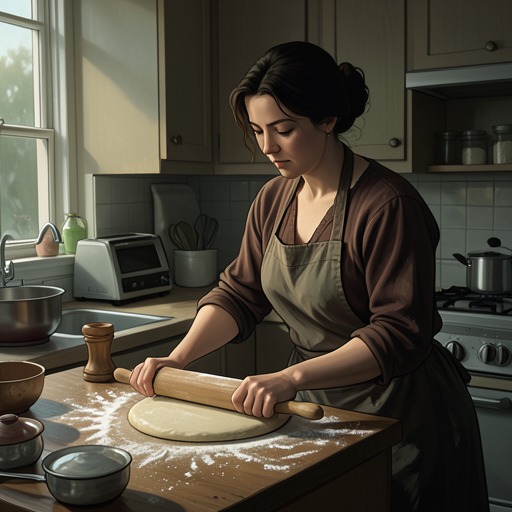
Nacha’s knowledge is practical and embodied rather than bookish. She knows how to prepare food, recognize what a person needs, and pass on instructions without written recipes. Her authority comes from years of work in the kitchen, but the novel also makes that work intimate: cooking is how she responds to hunger, illness, and distress. That combination of expertise and attentiveness shapes the relationship she forms with Tita.
Raising Tita in the Kitchen
When Tita is two days old, her father dies of a heart attack, and the shock causes Mama Elena’s milk to dry up. With no powdered milk available and no wet nurse found, the household needs another way to feed the infant. Nacha offers to take responsibility, believing that her experience gives her the best chance of educating the child’s stomach. Mama Elena accepts. The choice establishes Nacha as Tita’s caregiver, while allowing Mama Elena to attend to her mourning and the work of managing the ranch.
Tita grows up on teas and thin corn gruels in the kitchen, and the daily rhythms of cooking train her senses. She learns to recognize when beans are ready, when water is prepared for plucking chickens, and when bread is baking. The narrative connects this early attentiveness to the unusual sensitivity to food that defines Tita later. Nacha does more than keep the infant fed: she helps create the setting in which Tita acquires a lasting way of understanding the world.
Their bond is also remembered through ordinary acts of companionship. Tita’s recollections include childhood games in the kitchen, trips to the market, warm tortillas, and the aromas of Nacha’s noodle soup, chilaquiles, champurrado, and bread with cream. Nacha braids Tita’s hair, tucks her in, cares for her when she is sick, prepares what she craves, and makes chocolate. These details make care tangible as repeated labor, not simply a general feeling. They also help explain why Tita experiences the kitchen as a place of attachment even when the family’s rules make the rest of her life restrictive.
Care in Moments of Crisis
Nacha recognizes Tita’s distress during the preparations for Rosaura’s wedding. After three days of work on twenty courses, she is exhausted herself, but notices that Tita is close to a nervous collapse. When Mama Elena leaves the kitchen, Nacha stops Tita from continuing to stir and encourages her to cry in private rather than expose her grief at the wedding. The gesture shows how closely she reads Tita’s condition and how she makes room for a response that the household’s demands otherwise suppress. Her care is constrained by the same labor that exhausts her, but she still intervenes when she sees that Tita cannot continue.
Her guidance reaches beyond the kitchen. When Rosaura goes into labor and the others cannot return to the ranch, Tita is left to assist her sister without knowing how to deliver a baby. Kneeling in desperation, she asks Nacha for help. The narrative then presents Nacha’s instructions as reaching Tita at the crucial moment: Tita learns how to cut the umbilical cord, clean the newborn with sweet almond oil, bind the navel, and dress the baby. The detailed sequence turns inherited knowledge into immediate care. What Tita learned from Nacha’s cooking becomes a model for what to do in an emergency, and Tita is able to care for the child and bring him to his mother.
Nacha’s lessons also include kitchen lore. Tita remembers her saying that tamales become angry and remain uncooked when people argue while preparing them; singing to them can make them happy and allow them to cook. Later, after a conflict with Rosaura, Tita finds that the beans have not softened despite hours on the stove. She applies the lesson by singing, and the beans cook. The episode presents Nacha’s teaching as both practical folk knowledge and a way of linking emotional conditions to food. Under Tita’s hands, a saying passed down by Nacha becomes a means of completing a meal after household discord.
Death and Continuing Presence
Nacha dies on the day of Rosaura’s wedding. When Tita goes to find her, she discovers that Nacha has died, with medicinal leaves on her temples and a picture of her fiancé in her hands. The loss comes as Tita is already facing Mama Elena’s conviction that she deliberately spoiled the wedding cake. Nacha can no longer speak in her defense, and Tita is unable to persuade her mother that the extra ingredient was the tears she shed while preparing it. Her death therefore removes both a beloved caregiver and the person most able to affirm Tita’s experience within the household.
Yet the narrative does not confine Nacha to the past. When John Brown and Chencha bring Tita ox-tail soup, the first sip recalls Nacha beside her, stroking her hair as she did when Tita was sick as a child. The soup opens a series of memories: kitchen games, market trips, warm tortillas, childhood foods, and the times the two of them prepared ox-tail soup together. Tita cries, laughs, and remembers the first step of the recipe, chopping the onion. The scene makes food a vehicle for recovering both a recipe and a relationship. Nacha’s presence is rendered through Tita’s sensory memory and the familiar actions the dish calls back.
The memory of Nacha also surfaces when Tita forms chocolate tablets and mourns the distance between her present life and the happier days of childhood. She recalls Nacha’s dishes, remedies, laughter, and care, and wishes she could recover even one moment of that earlier happiness. Such recollections do not undo loss; they show how Nacha remains part of Tita’s inner life, especially when later events make the apparent security of childhood impossible to reclaim.
Legacy and Narrative Role
Nacha’s influence survives through more than memory. Her lessons shape Tita’s skill, her responsiveness to others, and the recipes that can be recalled and prepared after Nacha’s death. The novel repeatedly makes the kitchen a place where knowledge passes through demonstration, repetition, and affection rather than formal literacy. Nacha’s care gives Tita a form of education that becomes useful in childbirth, in cooking for others, and in preserving a past that might otherwise be lost.
Near the end, as Tita and Pedro enter the transformed Darkroom, Nacha appears in a corner, lights the final candle, raises a finger to her lips, and fades away. The brief, silent gesture connects her once more to Tita’s most intimate threshold without turning her into an explanation for events. She remains a watchful presence whose care has outlasted her life. The book’s closing account of a cookbook surviving the ranch’s destruction further resonates with Nacha’s legacy: the recipes preserve a history of affection and labor, and Tita’s recollection of her great-aunt’s onion sensitivity carries Nacha’s kitchen knowledge into another generation.